Pilgrimage, history, and devotion
History of Our Lady of Ipswich
A Medieval Shrine of National Importance
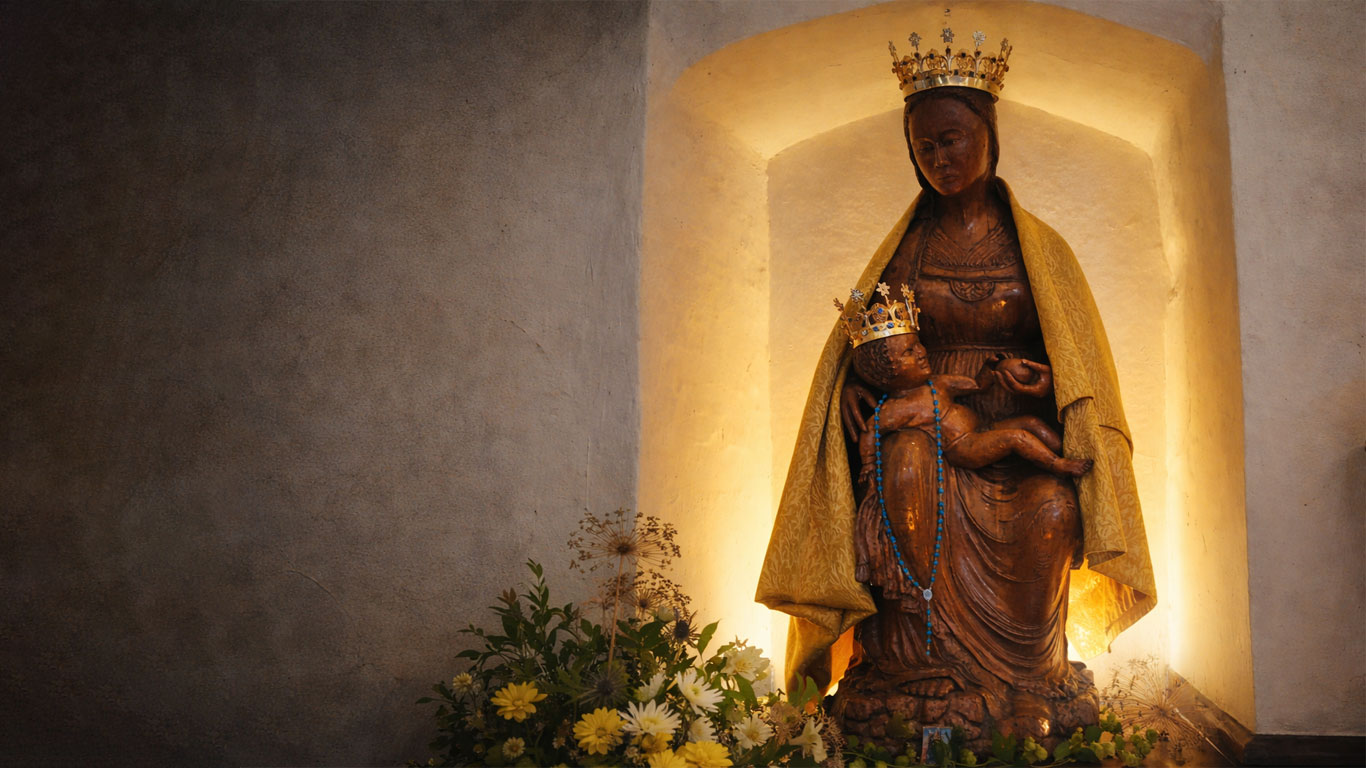
The shrine of Our Lady of Grace of Ipswich was a widely renowned place of pilgrimage. Each year thousands of pilgrims travelled to Ipswich to honour the Blessed Virgin Mary and seek her intercession.
During the late eleventh century many towns and cities across England established Marian shrines. These shrines were usually dedicated under one of Mary’s virtues. In Ipswich the shrine took the title Our Lady of Grace.
The shrine quickly became extremely popular. Contemporary accounts describe a building of impressive architecture, and numerous reports of miracles were associated with it. From the early medieval period until the Dissolution of the Monasteries, the Marian shrine at Ipswich was regarded as the second most important pilgrimage site in England after Our Lady of Walsingham in Norfolk, which had been established earlier in 1061.
The Origins of the Shrine
The precise date when the first shrine was built is uncertain. By comparing the dates of other English shrines built during the same period, historians consider 1152 a plausible date for the original foundation.
We do, however, have a precise date connected with the shrine’s relocation. On 29 March 1327, reports of miracles associated with the shrine reached the Pope. Pope John XXII contributed funds to support the construction of a new shrine and chapel on the site of the earlier All Saints chapel.
This papal contribution represents one of the earliest recorded financial grants by a Pope to a Marian shrine in Europe.
Using these records, historians believe the expanded shrine and chapel were completed towards the end of the fourteenth century.
Royal and Noble Visitors
The shrine of Our Lady of Grace attracted many notable visitors.
In 1297, Princess Elizabeth, daughter of King Edward I, married the Count of Holland in Ipswich. Historical records state that the wedding took place in “the King’s Chapel.”
Historians continue to debate whether this refers to the Priory of SS Peter and Paul in Ipswich or the shrine of Our Lady of Grace itself. Because the exact identity of the “King’s Chapel” remains uncertain, the precise location of the wedding cannot be confirmed.
However, it would not have been unusual for the royal family to visit the shrine. Newly married couples often prayed to the Virgin Mary asking her to bless their marriage and grant them children.
A later royal visitor illustrates this custom. Catherine of Aragon visited the shrine in 1517, praying for a son who would continue the Tudor dynasty.
Other distinguished visitors to the shrine included:
• Elizabeth of York, wife of King Henry VII, who donated half a golden angel coin (worth 3 shillings and 4 pence) in 1502
• Cardinal Thomas Wolsey
• Abbot John Reeve of the Priory at Bury St Edmunds
These visits demonstrate the national importance of the shrine during the late medieval period.
The Fate of the Shrine
Like many religious sites in England, the shrine of Our Lady of Grace was destroyed during the English Reformation.
Yet the story may not have ended there.
On the west coast of Italy lies the small fishing town of Nettuno, located roughly midway between Rome and Naples. In the town’s basilica there is a statue known since around 1550 as “The English Lady.”
This statue, venerated as Nostra Signora delle Grazie (Our Lady of Grace), has long been associated with the Ipswich shrine.
Local tradition tells that the statue arrived after a shipwreck in 1550. Some accounts suggest it had served as the figurehead of a ship carrying English sailors from Ipswich. According to these stories, the image had been rescued from the destruction ordered by Thomas Cromwell during the Reformation.
Whatever the precise events, the connection between Nettuno and Ipswich is deeply rooted in tradition. It seems unlikely that English sailors would have invented such a story without reason or benefit.
Today the statue remains in Nettuno’s basilica and continues to be venerated under the title Our Lady of Grace.
Source
Phil Roberts, Cardinal Wolsey – For King and Country, Pen and Sword Books Ltd.
Last updated on Monday, March 9th, 2026 at 2:16 pm